

The Clay Masks I Trust

Sofia Nakamura · Fashion Team
I used to treat clay masks as something I had to endure: ten minutes of tight, cracking skin followed by an excessive amount of moisturizer. Once I stopped leaving them on until they were completely dry, the experience became much better.
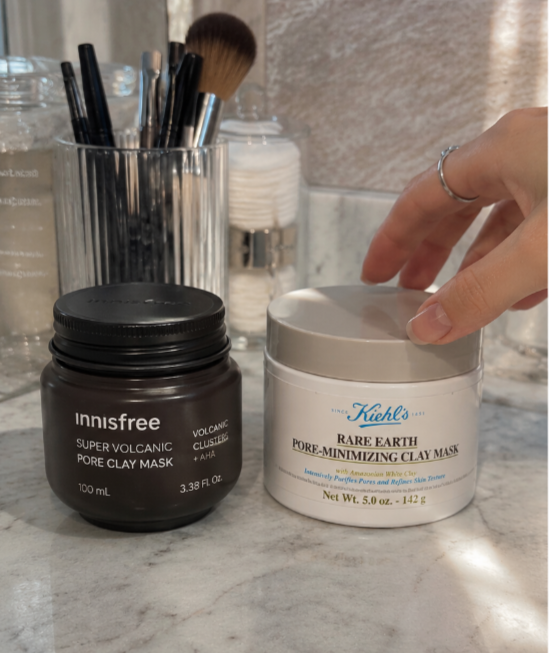
Innisfree Super Volcanic Pore Clay Mask and Kiehl’s Rare Earth Pore-Minimizing Clay Mask both help when my T-zone feels congested, but they behave quite differently on my skin.
The Stronger Reset
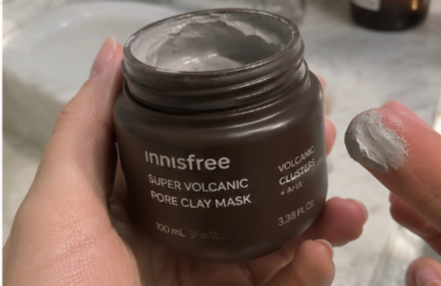
Innisfree Super Volcanic Pore Clay Mask is the one I use when my forehead, nose and chin feel noticeably oilier than usual. The texture is dense but spreads easily if I apply it over slightly damp skin. I usually keep the layer fairly thin and concentrate it only where I actually need it instead of covering my entire face. What I notice after rinsing is that my nose feels smoother and the shine through the center of my face is reduced. It is also the mask I prefer after a week of heavy sunscreen and makeup when my pores simply look more obvious.
The important part for me is timing. If I leave it until the mask becomes completely stiff, my cheeks feel uncomfortable afterward. Around ten minutes is enough, and sometimes I rinse sooner if the surface begins drying quickly. I would recommend this one mainly for combination or oily skin rather than very dry or easily sensitized skin.
The Gentler Option
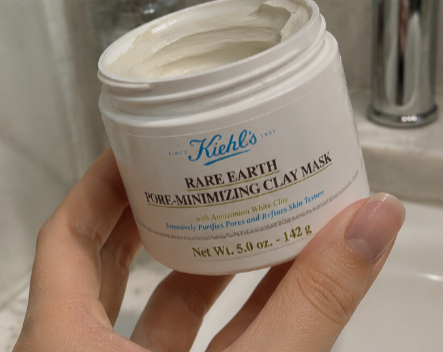
Kiehl’s Rare Earth Pore-Minimizing Clay Mask feels slightly creamier and less intense on me. I still mainly use it around my nose, chin and inner cheeks, but I can spread it over a larger area without immediately worrying that my skin will feel stripped afterward. It gives me that clean, smooth feeling I want from a clay mask, yet my face does not feel quite as tight once I rinse it off.
I especially like using it before an event when I want makeup to sit more evenly around my nose. It does not magically erase pores, but when my skin is oily or congested, the surface looks smoother afterward. I still follow with a hydrating serum and moisturizer because clay is never the final step in my routine.
Which One I’d Choose
For oily skin or a more intensive weekly reset, I would pick Innisfree. It feels stronger and gives me the most noticeable oil-control effect.
For combination skin, occasional congestion or anyone who dislikes very drying masks, I would start with Kiehl’s. It feels easier to use regularly and is the one I find more forgiving.
My biggest recommendation with either one is simple: do not wait until the clay cracks. A shorter treatment gives me much better results than trying to make the mask feel as “deep-cleaning” as possible.